Central Hudson Hosting Capacity Map
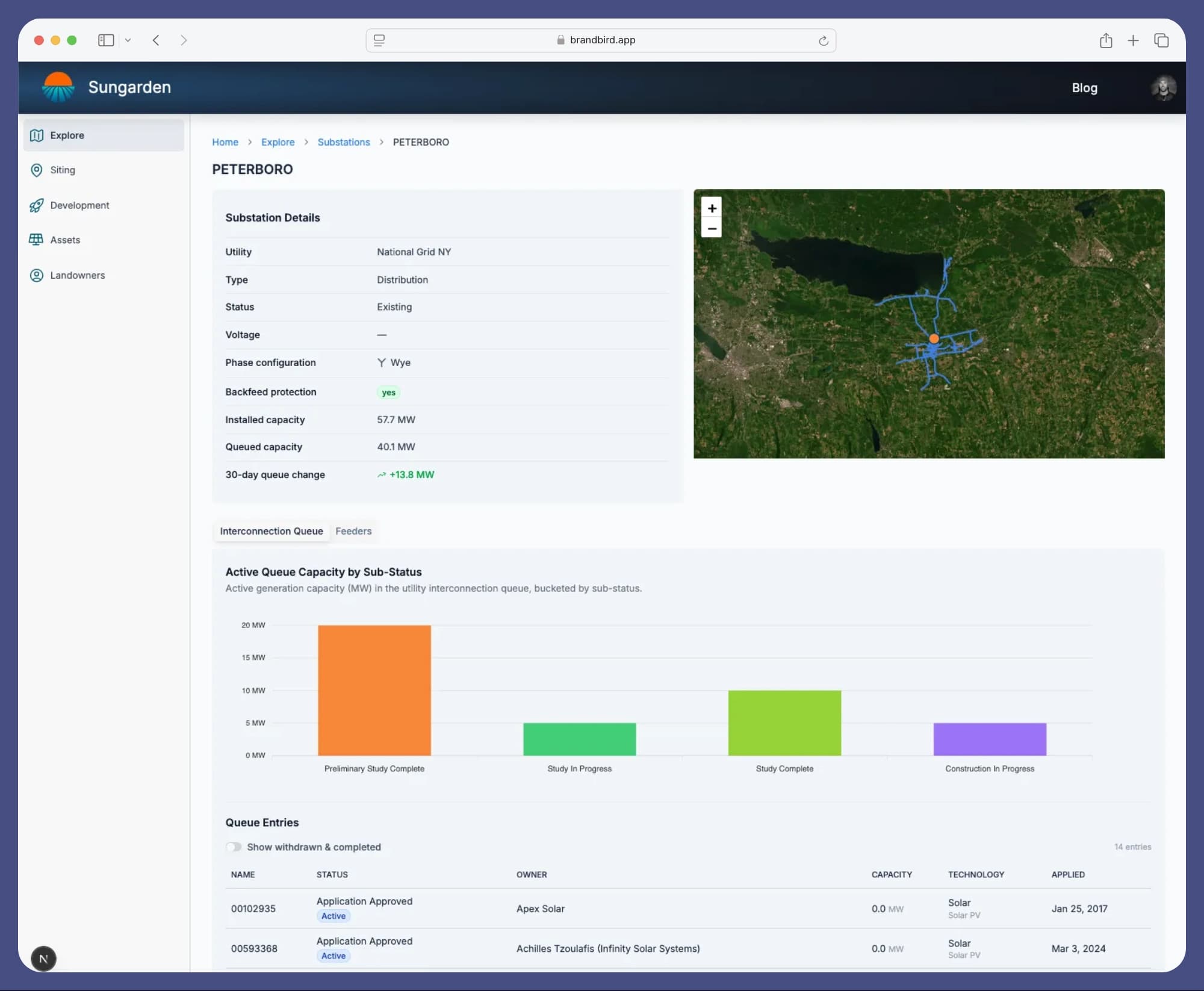
Feeder hosting capacity across the Mid-Hudson Valley — on the same map as parcels, ownership, substations, slope, and the live SIR interconnection queue.
Explore the Map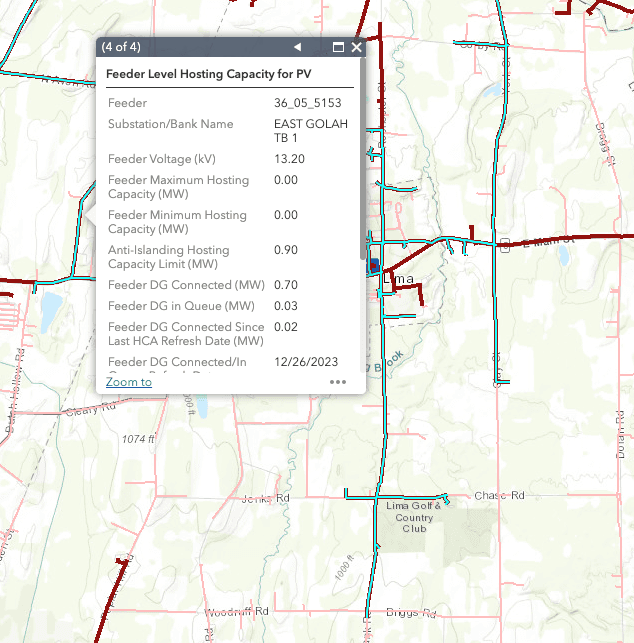
A small territory in a crowded market
Central Hudson serves the Mid-Hudson Valley from Poughkeepsie north toward Catskill — around 300,000 electric customers, making it one of the smaller of New York's six Joint Utilities. It also sits in one of the state's most competitive community distributed generation markets, close enough to New York City that land carries a premium and interest in every workable circuit is high.
Small system plus strong demand produces a specific dynamic: the feeders worth having attract applications quickly, and a capacity number that looked good last quarter may already be committed. Here more than anywhere else in the state, reading capacity without reading the queue against it is a way to waste a month.
Terrain and land use disqualify sites the portal calls fine
Much of this territory climbs into the Catskill foothills and the ridges along the Hudson. Slope removes a real share of parcels that look ideal on a capacity map, and the valley adds wetlands along the river and its tributaries, agricultural district protections, and local communities that pay unusually close attention to viewshed.
None of that appears in a hosting capacity viewer. Sungarden keeps Central Hudson's hosting capacity map in sync and puts it on one map with parcels and ownership, slope, wetlands, protected areas, and New York's SIR queue — so a site that fails on gradient fails during screening rather than after you've paid for a survey.
What Sungarden loads for Central Hudson
- Feeder-level hosting capacity
- Feeder geometry and attributes
- Substations
- Parcel boundaries and ownership (New York)
- Interconnection queue, mapped to substations
Not yet loaded for this territory: feeder load curves.
Frequently asked questions
Where does Central Hudson publish its hosting capacity map?
Central Hudson publishes feeder-level hosting capacity through its System Data Portal, under the Joint Utilities of New York's commitments from the state's Reforming the Energy Vision proceedings. As with the other Joint Utilities viewers, it shows circuits and capacity values but carries no parcels, no ownership, and no queue context.
Why does capacity fill up so quickly in Central Hudson territory?
It is a small territory — roughly 300,000 electric customers across the Mid-Hudson Valley — sitting next to the most valuable distributed generation market in the state. Strong community distributed generation economics and a limited number of circuits mean the good feeders attract applications fast. Queue position is often the deciding factor rather than raw capacity.
Does terrain matter more here than elsewhere in New York?
Yes. Much of the territory runs into the Catskill foothills and the ridges flanking the Hudson, so slope disqualifies a meaningful share of otherwise well-located parcels. A site can sit on a circuit with ample headroom and still fail on gradient or buildable-area grounds, which is why screening slope alongside capacity saves real time in this territory.
What non-grid constraints should I expect in the Hudson Valley?
Agricultural district protections, wetlands along the river and its tributaries, and unusually active local attention to viewshed and scenic character. None of these show up on a hosting capacity map, and all of them can end a project after you have spent money on it. Screening them at the same time as capacity is the point.
How current is the data in Sungarden?
Sungarden syncs Central Hudson's published hosting capacity and substation data on a regular schedule, and monitors New York's SIR queue continuously — including alerts when projects withdraw and capacity frees up at a substation.
Other New York hosting capacity maps
Or start from the New York hosting capacity overview to compare every utility in the state on one map.
Find your next site in the Hudson Valley.
Get Started For FreeFree during beta
Sungarden is an independent platform and is not affiliated with or endorsed by Central Hudson. Hosting capacity and system data are sourced from Central Hudson's published datasets and are intended for screening only — not as a substitute for a utility interconnection study.